In the evening, on clean hands
After your last hand wash of the day, when you won’t need to get them wet again.

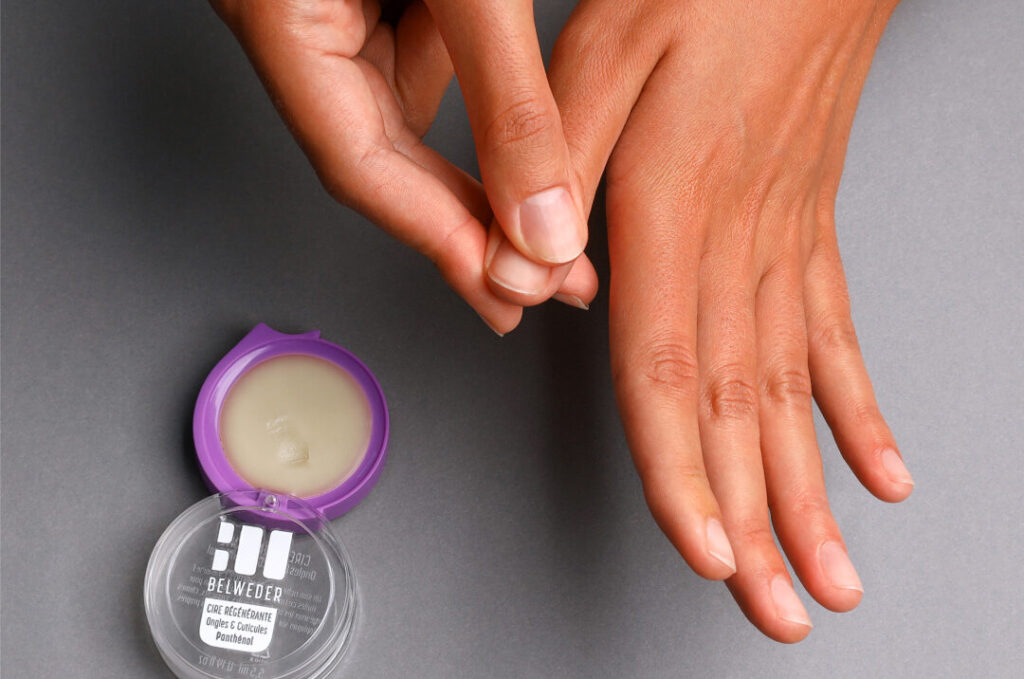

The regenerating panthenol wax on video
Regenerating nail and cuticle wax with panthenol
A regenerating treatment with an elastic, non-greasy texture that nourishes and protects damaged nails and cuticles, in a small pot that fits anywhere.


Spotted a mistake or something that needs updating? Write to us: we will check and correct the article if needed.

Cold, wind and central heating dry out skin, lips and nails. Why it happens, which treatments to choose and a five-step routine to get through winter in comfort.

Summer is a season we all look forward to: beaches, swimming pools, lazing in the sun. But these moments

A beautiful manicure isn’t just about looks; it’s also about healthy nails. And doing it

What is squalane? Squalane is a natural cosmetic ingredient derived from squalene oil (found in

For Mother’s Day, give your mum a natural care gift set with Damask Rose. A gentle, effective gift idea full of love, from Belweder. Mother’s Day: give your mum a Tendresse de Rose beauty gift set
Mother’s Day is a precious occasion to celebrate all mums, those wonderful women who are by our side every day with love, patience and kindness. Every year, on the last Sunday of May in France, we have the chance to say “thank you” with a kind word, a thoughtful gesture… or a gift chosen from the heart.
At Belweder, we have created a delicate, natural care gift set to pay tribute to them with tenderness and beauty.
A tradition of love… and care
Since 1950, Mother’s Day has been a true institution in France. It reminds us of the importance of family ties and invites us to celebrate a mother’s unconditional love.
And what if, this year, you gave her a moment of wellbeing just for herself? A gentle, sensory and comforting care ritual, a reflection of everything she has given you.
The “Tendresse de Rose” gift set: a tribute in three treatments
The Tendresse de Rose gift set is made up of three treatments rich in natural active ingredients, designed to enhance the skin and lips while providing a real moment of pleasure.
The Damask Rose Serum
Rich in Damask Rose Oil and plant-based Squalane, this 99,8% natural serum moisturises intensely, soothes and improves the skin’s elasticity. Its light, oily texture makes it an ideal treatment for mature or delicate skin.
The Rosé Fluid Lip Balm
Enriched with Shea Butter and Vitamins A and E, this balm gives a slightly glossy finish while nourishing and protecting the lips.
The Repairing Lip Balm
Thanks to Jojoba and Cottonseed oils and Aloe vera extract, this treatment repairs, revitalises and helps prevent the signs of ageing. Its pearly veil leaves the lips soft and luminous.
Rose oil: a treasure for the skin
Used for centuries, rose oil is prized for its virtues:
Moisturising and nourishing
Soothing for sensitive skin
Anti-ageing and antioxidant
Regenerating for mature skin
Its subtle floral fragrance turns every skincare step into a moment of wellbeing.
Give more than a gift
At Belweder, we believe in a natural, accessible and generous kind of beauty. The Tendresse de Rose gift set is more than a treatment: it is a message of love, a delicate gesture to pass down between generations.
Where can you find it?
This gift set is available in a limited edition at www.belweder.com. Don’t wait to delight your mum with a natural beauty gift, as unique as she is!

Lorsque vos lèvres sont mises à rude épreuve par le froid, le vent, le soleil ou la pollution,
🚚 Free delivery on orders of 39,00 € or more
