Retinol: benefits, effects on the skin and how to get started

Retinol and young skin: is it compatible?

Retinol has become the most sought-after anti-ageing active ingredient, and also one of the most misunderstood. What does it really do to your skin, should you worry about redness in the first few weeks, can you use it when you’re young or during pregnancy, and what have EU regulations changed? Here are the answers, based on French and European medical sources.

Updated on 7 November 2026 by Maria Dagiel-Petit, managing director of Belweder France.

Retinol is a form of vitamin A. It belongs to the large family of retinoids, which includes both cosmetic ingredients and medicines. Dermato-Info, the website of the French Society of Dermatology (SFD), draws a clear distinction: cosmetic retinoids such as retinol promote cell renewal, whereas retinoids prescribed for acne, such as tretinoin or adapalene, are a medical treatment. Retinoic acid, the most active form, is in fact banned from cosmetics in Europe, whatever its concentration, the European scientific committee responsible for consumer safety points out.

On the skin, Dermato-Info states that retinol and retinoid derivatives work effectively in the dermis and epidermis. Yet the same site urges you to keep a cool head: anti-ageing creams do have an effect, but it falls far short of what the advertising promises. The sun remains the main factor in skin ageing, and no product can make up for unprotected exposure.

Finally, retinol has an exfoliating effect. Que Choisir magazine stresses that it makes the skin thinner and more fragile, and therefore more vulnerable to the sun. It is this two-sided nature, renewal on the one hand and temporary fragility on the other, that explains all the precautions for use set out below.

Before and after: what to expect, and when

The first few weeks are often the most confusing. Retinoids can cause redness, flaking and temporary burning sensations, explains Dermato-Info in relation to acne treatments, and the SFD specifies that tretinoin is irritating mainly at the start of treatment. With cosmetic retinol, the principle is the same: your skin needs time to get used to it.

When it comes to results, patience is needed. The medical website Vidal states that with a retinoid treatment for acne, improvement appears after four to six weeks. This timeframe concerns a medicine rather than a cosmetic, but it gives a realistic idea of scale: you judge a retinol product over several weeks of regular use, not a few days. The spectacular before-and-after photos you find online should be viewed with some detachment, especially as Dermato-Info points out that anti-ageing effects fall far short of what the advertising promises.

If your skin gets too red, the answer isn’t to give up but to space out applications. In cases of significant irritation, Vidal describes starting treatment every other day. Allodocteurs recommends starting gradually by spacing out uses, with a thin layer applied in the evening. Skin that burns, swells or stays red for several days, however, means you should stop the product and ask a doctor or pharmacist for advice.

Retinol and young skin: do they go together?

This is the question that gave this article its title, and the answer depends on what you’re looking for. None of the French medical sources we consulted sets a minimum age for using a retinol cosmetic. However, they all draw a clear line between cosmetic skincare and acne treatment.

Among young people, retinol is often considered for spots. Yet the retinoids that work against acne are medicines. The NHS, the UK’s health service, presents them as prescription treatments, to be applied once a day at bedtime, which can irritate and sting and mean you need to avoid the sun. Dermato-Info lists them among acne treatments, alongside salicylic acid or glycolic acid. A retinol serum sold as a cosmetic is not designed to treat established acne.

If acne doesn’t respond to first-line care, spreads, leaves cysts or scars, or gets you down, France’s national health insurance (Assurance Maladie) advises seeing a doctor, who can prescribe the right treatment. For young skin with no particular problems, the essentials are simple: cleanse gently, moisturise and protect from the sun. Retinol can come later, when the aim is to maintain firmness and skin texture; our first wrinkles guide explains how to introduce it at the right time, and our oily skin and enlarged pores guide sets out the routine for blemish-prone skin.

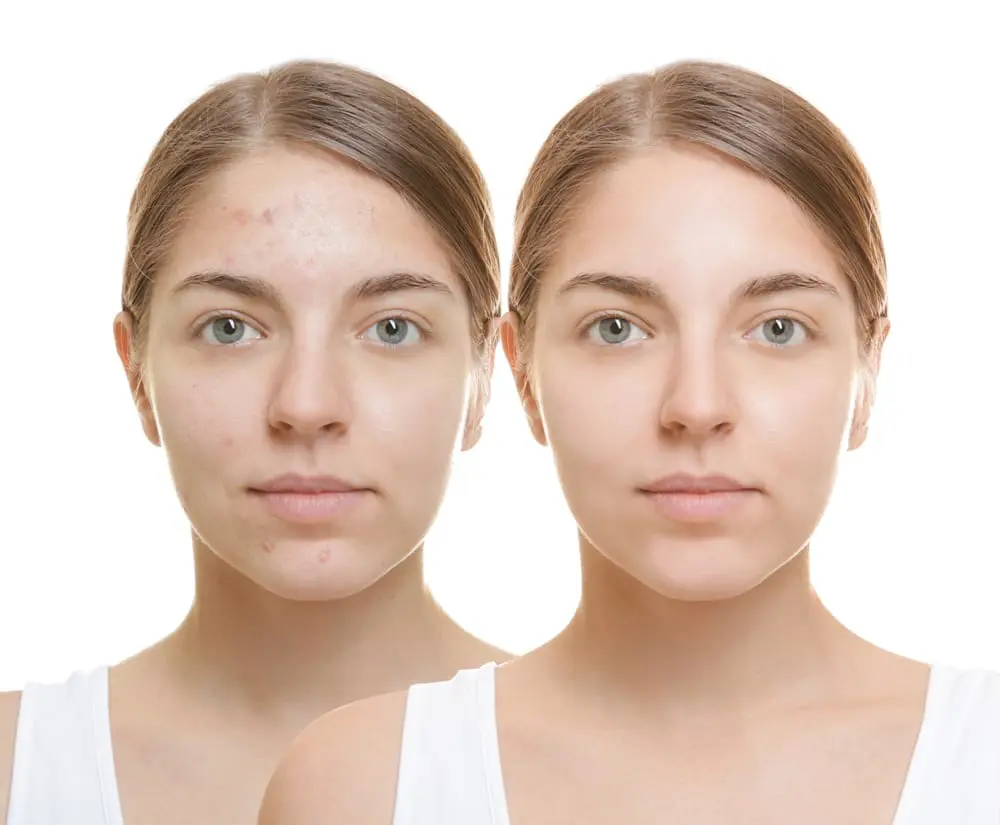
Before-and-after illustration of young, blemish-prone skin

Getting started in 3 steps

1

Start gently

Two to three evenings a week to begin with, as the SFD advises for retinoids, then increase if your skin tolerates it.

3

Protect your skin the next day

Sunscreen every morning, as retinol makes the skin more vulnerable to the sun.

The retinol serum on video

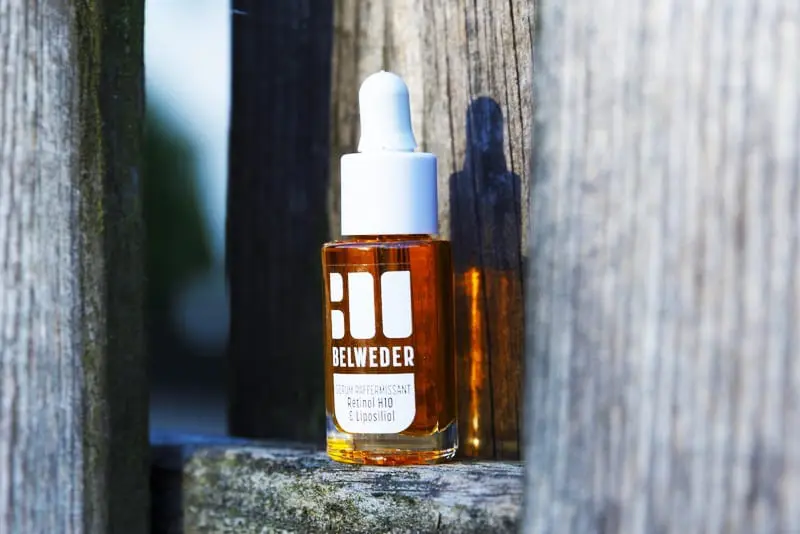
Firming retinol serum

A serum for skin that is losing elasticity, with enlarged pores or pigmentation spots, which helps reduce and prevent the signs of skin ageing.
All our videos on YouTube

Sun and pregnancy: the precautions you need to know

The first precaution concerns the sun. Que Choisir points out that retinol’s exfoliating effect makes the skin thinner and more vulnerable to UV, and advises applying photosensitising active ingredients only in the evening, before bed. For medicinal retinoids, Dermato-Info describes daily sun protection as essential. So applying retinol in the evening doesn’t mean you can skip sun protection the next morning, especially in spring and summer.

The second concerns pregnancy. France’s National Agency for the Safety of Medicines (ANSM) has contraindicated retinoids applied to the skin to treat acne, such as tretinoin, isotretinoin, adapalene or tazarotene, in women who are pregnant or planning a pregnancy. The amount that passes into the bloodstream is negligible, the agency states, but it cannot be completely ruled out. Dermato-Info points out that these retinoids are contraindicated during pregnancy because of a teratogenic risk, even when applied locally, and advises asking a doctor for advice if you are pregnant, planning a pregnancy or breastfeeding.

These texts concern medicines, and we have not found any official French position on cosmetic retinol during pregnancy. As a precaution, we advise you to stop using retinol skincare during this time and to talk to your doctor or midwife about it. If you are breastfeeding, also ask for advice before starting again.

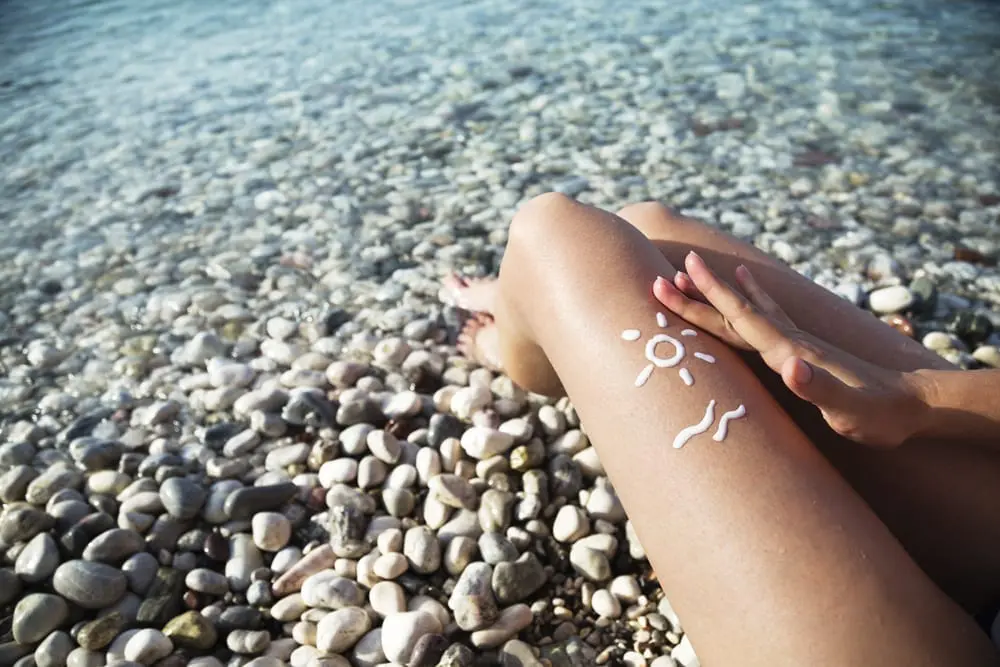
Sunscreen being applied to a leg by the water

What the EU regulations change

Europe now regulates vitamin A in cosmetics more strictly. Commission Regulation (EU) 2024/996 of 3 April 2024 covers three substances: retinol, retinyl acetate and retinyl palmitate. It sets maximum concentrations, expressed as retinol equivalent: 0,05% in body lotions and 0,3% in other products, whether rinse-off or leave-on. The European Scientific Committee on Consumer Safety (SCCS) explicitly places face and hand creams in this second category.

The reason is not that retinol is dangerous on the skin. The committee judged vitamin A to be safe at the concentrations adopted, but noted that the consumers most exposed through their diet and food supplements, i.e. 5% of the population, could already be exceeding the upper intake limit. The regulation therefore also requires a warning on the label, asking users to take their daily vitamin A intake into account before use.

The timetable has two stages. Since 1 November 2025, non-compliant products can no longer be placed on the European market, and from 1 May 2027 they will no longer be allowed to be sold there at all. Our Firming Serum with Retinol H10 is based on a derivative, Retinol H10, which makes up 8% of the formula and appears as hydrogenated retinol in its ingredient list. It is combined with 4% Liposiliol C, 10% squalane and sea buckthorn and jojoba oils.

Frequently asked questions

It’s common at first. Retinoids can cause redness, peeling and temporary burning sensations, explains Dermato-Info. Space out your applications and moisturise well; if the irritation persists, stop and ask for advice.

Yes, as long as you apply it in the evening and protect your skin every morning, because retinol makes it more vulnerable to the sun, Que Choisir points out.

The retinoids that treat acne are medicines, prescribed by a doctor. A cosmetic retinol serum is not an acne treatment: if your spots don’t respond to skincare, see a doctor.

According to the ANSM, medicinal retinoids applied to the skin are contraindicated during pregnancy. As a precaution, also stop using retinol cosmetics and talk to your doctor.

Regulation (EU) 2024/996 limits retinol, retinyl acetate and retinyl palmitate to 0,3% retinol equivalent in face care products, and to 0,05% in body lotions.

Find out more: our guides to first wrinkles, dull skin and dry or dehydrated skin, and all our face care products. Free delivery in France on orders of €39 or more.

Sources: Dermato-Info, “M’informer des traitements de l’acné”, Dr Bénédicte Oulès and Dr Léna Ronjat, updated 19 July 2025; Dermato-Info, “Les rétinoïdes topiques”, Dr Léna Ronjat, 19 May 2026; Dermato-Info, “Le vieillissement de la peau”, 24 October 2019; SCCS, Scientific Committee on Consumer Safety, “Revision of the scientific opinion on vitamin A”, October 2022; European Commission, “Règlement (UE) 2024/996 du 3 avril 2024”; ANSM, “Nouvelle contre-indication pendant la grossesse pour les rétinoïdes utilisés par voie cutanée dans le traitement de l’acné”, updated 14 March 2021; NHS, “Acne – Treatment”; Que Choisir, “Cosmétiques : les ingrédients incompatibles avec le soleil”, Hélène Bour, 30 June 2025; Allodocteurs, “Le rétinol est-il un produit anti-âge efficace ?”, Rym Ben Ameur, 12 November 2025; Vidal, “Les traitements locaux de l’acné”, updated 28 October 2024; Assurance Maladie (ameli.fr), “Acné : les bons gestes et les cas où il faut consulter”.

The care products mentioned in this article

Spotted a mistake or something that needs updating? Write to us: we will check and correct the article if needed.

Belweder care

Lips, face, nails: discover the targeted care our articles talk about.

Also worth reading

Mother’s Day 2025: Give a Rose Oil Beauty Gift Set – Belweder

Give your mum a Tendresse de Rose beauty gift set

For Mother’s Day, give your mum a natural care gift set with Damask Rose. A gentle, effective gift idea full of love, from Belweder. Mother’s Day: give your mum a Tendresse de Rose beauty gift set
Mother’s Day is a precious occasion to celebrate all mums, those wonderful women who are by our side every day with love, patience and kindness. Every year, on the last Sunday of May in France, we have the chance to say “thank you” with a kind word, a thoughtful gesture… or a gift chosen from the heart.
At Belweder, we have created a delicate, natural care gift set to pay tribute to them with tenderness and beauty.

A tradition of love… and care
Since 1950, Mother’s Day has been a true institution in France. It reminds us of the importance of family ties and invites us to celebrate a mother’s unconditional love.
And what if, this year, you gave her a moment of wellbeing just for herself? A gentle, sensory and comforting care ritual, a reflection of everything she has given you.

The “Tendresse de Rose” gift set: a tribute in three treatments
The Tendresse de Rose gift set is made up of three treatments rich in natural active ingredients, designed to enhance the skin and lips while providing a real moment of pleasure.

The Damask Rose Serum
Rich in Damask Rose Oil and plant-based Squalane, this 99,8% natural serum moisturises intensely, soothes and improves the skin’s elasticity. Its light, oily texture makes it an ideal treatment for mature or delicate skin.

The Rosé Fluid Lip Balm
Enriched with Shea Butter and Vitamins A and E, this balm gives a slightly glossy finish while nourishing and protecting the lips.

The Repairing Lip Balm
Thanks to Jojoba and Cottonseed oils and Aloe vera extract, this treatment repairs, revitalises and helps prevent the signs of ageing. Its pearly veil leaves the lips soft and luminous.

Rose oil: a treasure for the skin
Used for centuries, rose oil is prized for its virtues:

Moisturising and nourishing

Soothing for sensitive skin

Anti-ageing and antioxidant

Regenerating for mature skin

Its subtle floral fragrance turns every skincare step into a moment of wellbeing.

Give more than a gift
At Belweder, we believe in a natural, accessible and generous kind of beauty. The Tendresse de Rose gift set is more than a treatment: it is a message of love, a delicate gesture to pass down between generations.

Where can you find it?
This gift set is available in a limited edition at www.belweder.com. Don’t wait to delight your mum with a natural beauty gift, as unique as she is!
Read the article