Free radicals and melanin: how the sun damages your skin, and how to protect it

Focus on melanin and free radicals!

Free radicals are often cited as the main culprits behind skin ageing. What exactly are they, why do the sun and pollution produce so many of them, how does melanin protect us, and what can we expect from antioxidant skincare? Here are the essentials, based on French and European medical sources.

Updated on 7 November 2026 by Maria Dagiel-Petit, managing director of Belweder France.

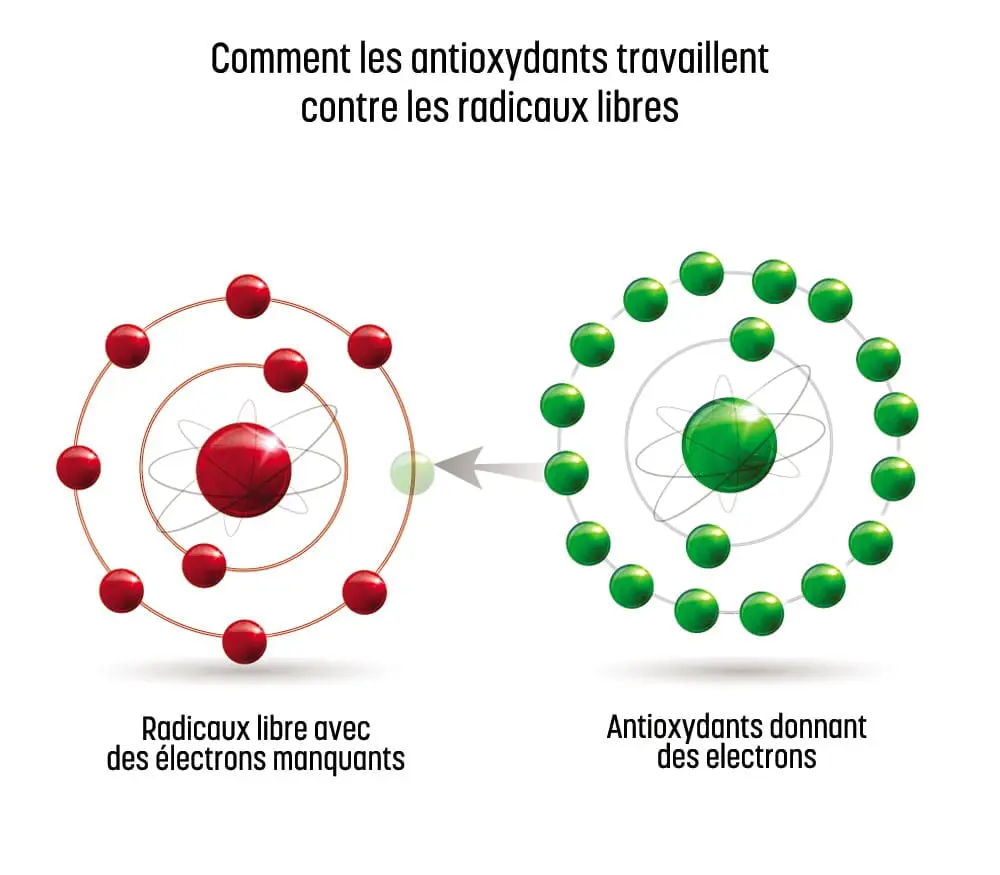
A free radical is an unstable, highly reactive molecule that tries to stabilise itself by stealing an electron from its neighbours. Dermato-Info, the website of the French Society of Dermatology, explains that these molecules oxidise cell components and can damage their DNA. Our bodies produce them all the time, and they have defences to neutralise them.

The problem starts when the balance is upset. Dermato-Info speaks of oxidative stress when free radical production exceeds the skin’s defence capacity. The damage then builds up over the years: the fibres that give the skin its firmness and elasticity deteriorate, and dark spots can appear.

This link between oxidation and age is not new. Writing in the journal médecine/sciences in 2006, researcher Robert Barouki noted that the free radical theory of ageing attributes part of ageing to the accumulation of damage caused by these molecules. It is one explanation among others, but it sheds useful light on the role of the environment: anything that makes the skin produce more free radicals speeds up its ageing. The two main culprits are well known: the sun and pollution. Our first wrinkles guide shows how these factors show up on the face.

UV and pollution: the two main producers of free radicals

UVA rays make up about 95% of the UV that reaches the skin, says Dermato-Info, and they penetrate as far as the dermis, the deep layer where the supporting fibres are found. There they generate free radicals without causing any visible burn: that’s why you can damage your skin without ever having been sunburnt. UVB rays, which carry more energy, act mainly on the surface and cause sunburn.

Pollution plays its part too. According to Dermato-Info, ozone and nitrogen dioxide deplete vitamin E and catalase, two of the skin’s natural antioxidant defences. The SFD’s website also stresses that UV and pollution act in synergy: their effects add up, and the skin of a city dweller who goes out in the sun takes both hits.

The consequences are not just cosmetic. France’s national health insurance (Assurance Maladie, ameli.fr) points out that more than 80% of skin cancers are linked to the sun. Limiting UV exposure is therefore the first step, well ahead of any skincare product. In practice: avoid the sun between 12:00 and 16:00, cover up and apply suitable sun protection. Our article on how long it takes to tan details these habits.

Melanin, the skin’s natural shield

Melanin is the pigment that gives the skin its colour. It is made by melanocytes, cells in the epidermis. Dermato-Info explains that their number is the same whatever the skin colour: what changes is the amount and type of melanin they produce.

This pigment protects in two ways. It absorbs some of the radiation, and it traps free radicals before they damage cells. Not all melanins are equal: pheomelanin, abundant in people with red or very blond hair, offers little protection, unlike the eumelanin in brown and black skin. According to Dermato-Info, black skin is about five times better protected than white skin.

This protection has its limits. Tanning is the skin’s response to damage: it makes more melanin because it has been exposed. Tanned skin is still vulnerable, and dark skin is not immune to sun damage. For fair skin, which produces little protective melanin, sunscreen is all the more important. The lips, which have almost no pigment, also deserve specific care, as our lips and sun guide explains.

Diagram: how antioxidants neutralise free radicals

Protect your skin in 3 steps

1

Limit exposure

Avoid the sun between 12:00 and 16:00, and cover up when the UV index is high.

2

Apply sunscreen

Every morning when the sun is shining, and reapply during prolonged exposure.

Antioxidants: a complement, not a sunscreen

Since free radicals damage the skin, antioxidants seem like the ideal defence. Dermato-Info remains cautious: products based on vitamin C or E may have antioxidant effects and help protect against the harmful effects of UVA. Interviewed by Allodocteurs, dermatologist Martine Baspeyras believes that vitamin C helps neutralise some of these molecules and can give the skin more radiance. She advises choosing it in an opaque bottle and points out that it does not replace sunscreen.

As for food supplements, Vidal is clear: the benefit of antioxidant capsules for protecting the skin from the sun has not been demonstrated. An antioxidant product applied in the morning can therefore complement sun protection, but never replace it.

That’s the idea behind our Antioxidant Serum with Vitamins B3, C and E: it’s applied in the morning, before your day cream and sun protection. Combined with a moisturising product such as our hyaluronic acid serum, it fits into a simple routine. To understand what you can expect from it in terms of radiance, our dull skin guide looks at vitamin C and niacinamide.

Frequently asked questions

An unstable molecule that oxidises cell components and can damage their DNA, explains Dermato-Info. The sun and pollution make the skin produce more of them.

It absorbs some of the UV and traps free radicals. Black skin is about five times better protected than white skin, according to Dermato-Info.

No. They can complement sun protection but never replace it, stresses dermatologist Martine Baspeyras.

Their benefit has not been demonstrated, according to Vidal. Sun protection applied to the skin remains essential.

Yes. Ozone and nitrogen dioxide deplete the skin’s antioxidant defences, and their effects add to those of UV, stresses the SFD.

Find out more: our guides to dull skin and first wrinkles, our article on tanning safely, and all our face care products. Free delivery in France on orders of €39 or more.

Sources: French Society of Dermatology, Dermato-Info, ‘La peau : comprendre sa structure et ses fonctions’, Dr Léna Ronjat, 12 April 2025; French Society of Dermatology, Dermato-Info, ‘Ce que l’environnement provoque concrètement sur la peau’, Dr Mathieu Bataille and Dr Léna Ronjat, 24 February 2026; Dermato-Info, ‘Le vieillissement de la peau’, 24 October 2019; French Society of Dermatology, Dermato-Info, ‘Le soleil et la peau’, 19 June 2019; Dermato-Info, ‘La peau de couleur’, Dr Antoine Petit, 19 February 2019; médecine/sciences, ‘Stress oxydant et vieillissement’, Robert Barouki, 2006; Assurance Maladie (ameli.fr), ‘Prévenir la survenue du mélanome cutané’, 14 November 2019; Allodocteurs, ‘La vitamine C est-elle vraiment efficace contre les rides ?’, Rym Ben Ameur with Dr Martine Baspeyras, 14 October 2026; Vidal, ‘Les compléments alimentaires pour prévenir les coups de soleil’, updated 9 July 2026.

The care products mentioned in this article

Spotted a mistake or something that needs updating? Write to us: we will check and correct the article if needed.

Belweder care

Lips, face, nails: discover the targeted care our articles talk about.

Also worth reading

Mother’s Day 2025: Give a Rose Oil Beauty Gift Set – Belweder

Give your mum a Tendresse de Rose beauty gift set

For Mother’s Day, give your mum a natural care gift set with Damask Rose. A gentle, effective gift idea full of love, from Belweder. Mother’s Day: give your mum a Tendresse de Rose beauty gift set
Mother’s Day is a precious occasion to celebrate all mums, those wonderful women who are by our side every day with love, patience and kindness. Every year, on the last Sunday of May in France, we have the chance to say “thank you” with a kind word, a thoughtful gesture… or a gift chosen from the heart.
At Belweder, we have created a delicate, natural care gift set to pay tribute to them with tenderness and beauty.

A tradition of love… and care
Since 1950, Mother’s Day has been a true institution in France. It reminds us of the importance of family ties and invites us to celebrate a mother’s unconditional love.
And what if, this year, you gave her a moment of wellbeing just for herself? A gentle, sensory and comforting care ritual, a reflection of everything she has given you.

The “Tendresse de Rose” gift set: a tribute in three treatments
The Tendresse de Rose gift set is made up of three treatments rich in natural active ingredients, designed to enhance the skin and lips while providing a real moment of pleasure.

The Damask Rose Serum
Rich in Damask Rose Oil and plant-based Squalane, this 99,8% natural serum moisturises intensely, soothes and improves the skin’s elasticity. Its light, oily texture makes it an ideal treatment for mature or delicate skin.

The Rosé Fluid Lip Balm
Enriched with Shea Butter and Vitamins A and E, this balm gives a slightly glossy finish while nourishing and protecting the lips.

The Repairing Lip Balm
Thanks to Jojoba and Cottonseed oils and Aloe vera extract, this treatment repairs, revitalises and helps prevent the signs of ageing. Its pearly veil leaves the lips soft and luminous.

Rose oil: a treasure for the skin
Used for centuries, rose oil is prized for its virtues:

Moisturising and nourishing

Soothing for sensitive skin

Anti-ageing and antioxidant

Regenerating for mature skin

Its subtle floral fragrance turns every skincare step into a moment of wellbeing.

Give more than a gift
At Belweder, we believe in a natural, accessible and generous kind of beauty. The Tendresse de Rose gift set is more than a treatment: it is a message of love, a delicate gesture to pass down between generations.

Where can you find it?
This gift set is available in a limited edition at www.belweder.com. Don’t wait to delight your mum with a natural beauty gift, as unique as she is!
Read the article